November 20, 2011

Chicago CreativeMornings #6 with Scott Thomas, who seeks simple solutions to complex problems


The sixth CreativeMornings event in Chicago began with a civic call to duty by speaker Scott Thomas (or SimpleScott): Remain responsible. Not only a call, it was also a reminder, a philosophical one, but philosophy applied, as evident in these statements:


To Thomas, design is civic responsibility, a selfless act to make any part of the world a little better. Demonstrating this was his highlighting of The Noun Project, which “collects, organizes and adds to the highly recognizable symbols that form the world's visual language.”


At the start of his presentation, Thomas quoted from theoretical physicist and cosmologist Stephen Hawking’s book Grand Design which posits simplicity as “a matter of taste.” Thomas stressed that it’s also a matter of responsibility: to truly love something and work on it really hard—only then will the reward become a self-fulfilling prophecy.

• • •

View the Design Feast Flickr set about Chicago CreativeMornings #6 with Scott Thomas.

• • •

“Remember to look up at the stars and not down at your feet. Never give up work. Work gives you meaning and purpose and life is empty without it. If you are lucky enough to find love, remember it is there and don’t throw it away.”
— Stephen Hawking

• • •

Big thanks: to Chicago Portfolio School,for hosting and 24 Seven for sponsoring Chicago CreativeMornings #6; to organizer Mig Reyes, videographers Craig Shimala and Charlie Curran, photographers Adan Altamira and Chris Gallevo for their great work on making CreativeMornings happen in Chicago.

• • •

Typeface of quotes is called Massive designed by Shawn Hazen, who also makes awesome typographic illustrations for series Creative Roles.

• • •

Read CreativeMornings-related posts:
• • •

November 16, 2011

Creative Role: The Restorer


Restoration drives renewal. At Steve Jobs’ annual back-to-school announcement (2010) of Apple’s new products and services, the news that kept my attention, more than the latest iPod Nanos and iPod Touches, concerned the retail stores in Paris and London. Both were restored buildings. As Jobs put it, “The old and the new together work beautifully.” The old buildings were restored to accommodate a new purpose.

The same can be said of the Mast Brothers, the Brooklyn chocolatier duo. In keeping to the storied practice of making handmade chocolate, this cherished quality flows throughout everything they do, particularly in their packaging:
“Everything roots back to our love affair with spirit of craft, of things that are crafted, whether it’s an old book, an old wooden sailboat, or a building. We do use blueprints on some of our [packaging] papers … We’re even restoring an old printing press and doing all in-house printing, so that our community can craft new designs for us.”
An unused thing gets stale over time. But making something newly can bring comfort and satisfaction, while simultaneously fulfilling a purpose. In Apple’s case, the restored buildings teem with technological play and purchases. With the Mast Brothers, their restored printer fortifies grassroots in addition to elevating packaging design. Restoration is a refreshing part of their renewal strategy.

Tap into your inner restorer.

• • •

This is the sixth piece of a series focused on the lively cast of characters whose roles make the play of Creativity. In case you missed the first, meet the Frameworker.

Typographic illustration, tailormade for this series, was done by Shawn Hazen. Read his Designer’s Quest(ionnaire).

• • •

November 15, 2011

Worth Reading: Cartoonist Hugh MacLeod’s “Evil Plans: Having Fun on the Road to World Domination”


Like some of the previously reviewed books, looks good without the jacket.

Following the review of Behance Founder and CEO Scott Belsky’s “Making Ideas Happen”, my collaborator Joe Giovenco and I review “Evil Plans: Having Fun on the Road to World Domination” by Hugh MacLeod, who is known for his “social objects in cartoon form” and writing about creativity. His daily newsletter speaks to the pulse of passion and purpose—ultimately, as MacLeod emphasizes: “To unify work and love.”

Total time: 20:52

Big thanks to Tiffany Liao of Portfolio for the speedy delivery of review copies. And big thanks again to Joe for collaborating on the review and for lending his recording tools and space, plus a feast which helped the appetite while recording.


Sausages, dill cheese curds, truffle cheddar and apple, hand-picked from an orchard

Episode notes:
• • • 

November 14, 2011

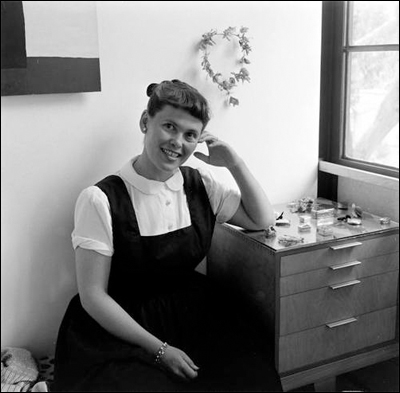
Lady Designer: Ray Eames (1912–1988)


Source: SnOOp


Sketches of chairs, circa 1943-1946. Source: studio international


Plywood sculpture, Untitled, 1943. Source: studio international

Biography by Fembio; Oral history interview (1980)

• • •

November 9, 2011

Interface Details: DUMBO’s Love, Cortney Bishop’s Desk, Periodicity’s Mobile App Screens

Discovered via swissmiss, smartassdesign and Artforge “lovingly crafted” The DUMBO Improvement District (1) website. Some writers are adverse to adverbs, judging them as extraneous. But the use of an adverb is fine here, totally. They bring to life how much effort is put into a project, and express the effort’s quality. Adverbs serve this purpose wherever it’s appropriate—even in a footer, which, as this example demonstrates, is an area not to be taken for granted (2).


Typical presentations of “About”-related details are in the form of words. Interior designer Cortney Bishop’s site mostly shows, rather than just tell, what she is about. She displays tools, sketches, colors and objects that compose her work world. It’s reminiscent of Ray Eame’s desk.


In showing the array of screens for their iPhone app, Periodicity, Germany-based Gryphos GmbH presented each user interface alongside the hardware. It’s a literal approach that gives the software direct context in a refreshingly straightforward way.


(1) Means: Down Under The Manhattan Bridge Overpass.
(2) Inspired to do the same for Design Feast’s footer.

November 8, 2011

Blogger’s Quest(ionnaire): Stephen M. Hackett of 512 Pixels

Based in his beloved city of Memphis, Tennessee, Stephen M. Hackett runs 512 Pixels, a weblog about technology, journalism and design. From Hackett, “The original Macintosh’s screen was 512 pixels across, helping set the standard screen resolution of 72 DPI. The Mac’s GUI paved the way for computers and design as we know them today. Nothing has been untouched since 1984. I want to pay homage to that with my work.” His thoughts about web-based publishing may help your entrance into the blogosphere or further inform your current work in it:

Why did you create a web site of regular entries?
At first, I just wanted to rant about my time working at an Apple Retail store as the Lead Mac Genius. Quickly, I discovered that wasn’t a sustainable (or healthy) way to go, so now I just want to share things that are interesting to me.

What web-based solution did you select and why?
I’m running a self-hosted (well, Media-Temple hosted) WordPress install. I like how flexible the platform is, and since just about *everyone* uses it, there's always someone out there who has solved just about any problem you could encounter.

What is your definition of a good blog and 
what are three good blogs that you frequently visit?
A blog should have a voice, and original content. Linked items are fine (I post a ton of them), but the writer’s voice is what makes a site memorable.

How do you create content for your blog?
I read a lot of websites. Too many. I also spend a lot of time reading books about nerdy things like Apple, NASA and more.

How do you stay organized and motivated 
to contribute to your blog?
I keep a running OmniFocus project full of article ideas. I use Instapaper to capture links I want to post to. Knowing that I have thousands of people who seem to like what I do is great motivation to not suck. I don’t want to waste my readers’ time.

For those aspiring to make a website composed 
of regular thoughts and/or images, what is your advice?
If you’re not interested in a subject, it will come through in your writing. Write about what makes you tick.

What is your quest in blogging?
I’d love to write full-time in the future, but for now, I want to continue to see 512 Pixels grow in size and in reputation. My awesome readers have everything to do that, so I want to keep them happy. However, ultimately, I want to keep learning about what I love—technology, and how it changes us.

• • •

512 Pixels’ logo and portrait courtesy of Stephen M. Hackett.

• • •

Read previous Blogger’s Quest(ionnaire) with Small Notebook’s Rachel Meeks, a Champion of Simplicity at Home.